Short-Cycle Recurring Revenue
Monthly Recurring Revenue (MRR) is the lifeblood of many successful indie online businesses. Solo founders and small teams shipping Software as a Service (SaaS), subscription media, and paid communities charge monthly or annual rates, which yields a stable financial foundation for the company to pay its operators and reinvest in growth. MRR lets creators, bootstrappers, and calm companies thrive.
The value of MRR is in the "RR", not the "M." Monthly makes sense because it is easy to think about (after all, the rent or the mortgage payment is due every month too) and it enables high enough prices that transaction fees are reasonable. Many companies also offer yearly subscriptions, yielding Annual Recurring Revenue (ARR). Often these subscriptions come at a discount because an annual subscriber costs less in transaction fees, gives the money up front for the company to reinvest, and in many cases is less likely to churn (cancel their subscription). But today, we turn our attention to shorter cycles of recurring revenue and their niche applications for digital businesses.
Apartment buildings charge by the month. Hotels charge by the night. This makes sense. Hotel stays are denominated in days, while most people stick around in apartments for at least a month. The pricing interval aligns with the value interval for the customer.
Daily Recurring Revenue: Listen Notes
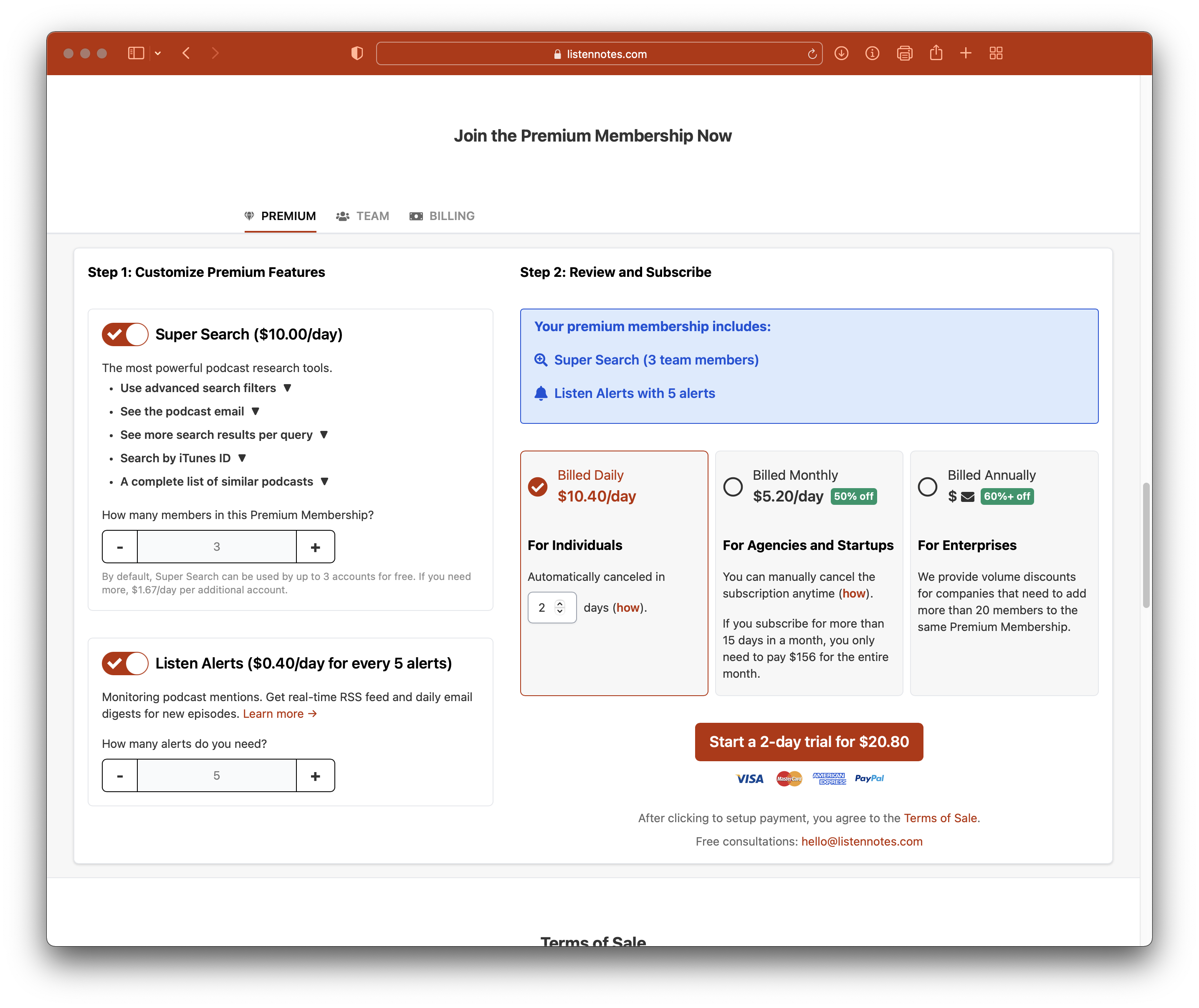
Listen Notes, a business and analytics platform for podcasts, prices its premium plan by the day. The premium plan offers full access to the platform's data, so it might take some users only a couple of days of work to extract the insights they need. Perhaps they might need to check in again for a day in a year. Overall, many users could get what they need in the period some platforms offer as a free trial.
So, to be compensated for the value that they are providing, Listen Notes does not offer a free trial. Users can sign up for 2 to 10 days at ten dollars per day, and if they want to stick around they can subscribe indefinitely for half the daily rate. This aligns the pricing with the time period that the users need the platform.
Weekly Recurring Revenue: BetterHelp

BetterHelp, an online provider of licensed therapy, prices its services weekly. Different people require therapists' services for vastly different periods of time, so this flexibility compared to monthly pricing aligns with users' needs. BetterHelp thus earns weekly recurring revenue.
Like Listen Notes, BetterHelp's billing interval and pricing interval are different. While BetterHelp prices weekly, they only charge every 4 weeks, reducing transaction fees.
If annual plans are favored partially for reducing churn, then it stands to reason that services priced daily or weekly might have higher churn. Given that I don't have financial information on either of the example services, I cannot comment on their churn.
Most subscriptions should be monthly or annual. These are the defaults for good reason. But if pricing your SaaS, information product, community, or other digital offering feels strange at these timelines, consider if you could use shorter subscription intervals to better communicate your product's value.